Friday, July 31, 2015

Health Basics and the Bigger Picture

Health Basics and the Bigger Picture By Cheryl Jones

There are some basic fundamentals of health. One is to get the proper nutrients in the body. Another is to get the toxins that have accumulated out of the body. Nutrients feed the body, while toxins hinder and block the body from working properly.

Where do toxins come from? They come from foreign and chemical substances in the air, water, and soil. They come from chemicals in cleaning products. Toxins are all around us in the types of products that are used in modern day society. Even with the best of intentions, simply living life exposes people to toxins. An example of toxins is this. This writer was told a story by a person who visited a chicken factory where eggs were laid and who noticed that there were no flies. The person asked why? The answer was that bug spray was put in the chicken feed. The question is, do you want that in your breakfast eggs? Another example: look on the back of most tubes of toothpaste. There is a warning. So these are just a couple of examples of toxins in the food or in many of the products we use.

Not only are there toxins, there are also genetically modified foods, also called GMOs (genetically modified organisms). What does "genetically modified" mean? It means the genes have been modified to make the food more saleable... redder tomatoes with a longer shelf life, food that resists insects while growing, food that is more transportable to market. GMOs are a serious problem. They have been banned in Europe. However there is a new move by the purveyors of GMOs in conjunction with legislations to hide the truth about GMOs by preventing the labelling from indicating the truth.

To really get serious about health, it is necessary to become informed about topics such as organic produce and GMOs. It is necessary to learn where toxins come from and begin to eliminate them from the diet and life style. It is necessary to learn how to build the body up from the effects of poor diet and toxins.

Actually, the answer goes beyond the personal level. While it is important to deal with the issue at the personal level, and to improve your own health and that of your family, it is necessary to get more involved at the political level. It is necessary to be on top of what is happening in the political realm, to be able to give your voice to your Senators, Representatives, and other officials in other nations. Basically, the lobbyists and money powers will rule over the voice of the people unless people make their voices known.

Cheryl Jones is a copywriter and online entrepreneur.. She authors on a variety of topics. Samples of her work can be viewed at http://cherylblogs.com You can contact here there for your writing needs, or to view some of her other interests and concerns.

Article Source: http://EzineArticles.com/?expert=Cheryl_Jones
http://EzineArticles.com/?Health-Basics-and-the-Bigger-Picture&id=9119106

Wednesday, June 17, 2015

To Go to College or Not to Go to College


To Go to College or Not to Go to College By Julia C Gentry

...That is the question!

Or is it??

In my opinion, whether someone decides to go to college or not go to college is not the issue. Yet, as a nation, we spend more time, energy, money, emotions, and thought into choosing the right educational platform that we overlook the importance of choosing the one platform that works for us. It is as if we are the blind leading the blind..."Graduate high school, go to college, get a degree, get a good paying job, work for 40+ years, and then retire..." I don't know about you, but that doesn't seem to be working so well for most people, for 2 reasons:

#1. There are currently 1.5 million people already unemployed, and another 30 million people coming into the workforce... what makes you think "going to school and getting a degree" is going to allow you the right to get a job? Not anymore, not in this nation.

#2. There is no hope in that. The majority of us are living life according to someone else's standards versus living the life that we want to live. I hate to break it to you, but no college, no degree, and no job is ever going to make you feel satisfied if it isn't something you were born to do.

I didn't go to college and yet, I am a young entrepreneur with 3 businesses. My husband has a fire science degree and he never did anything with it. The owner of Wolfgang Puck stopped going to school at age 14. Walt Disney dropped out at 16. Ty Warner (the guy who developed the Beanie Baby) actually dropped out of college. So did Steve Madden, the shoe guru. Simon Cowell (yep, you guessed it, American Idol producer and judge) dropped out of high school. And I could go on and on... Not to put down education, because I do think it is important but to show you that college has nothing to do with becoming successful. People have proven that for years!

Am I saying to do away with college entirely? No, absolutely not. Do I think college is a good thing? Sure... for some, but not for everyone. In complete honesty, I am a bit partial in thinking that college creates robots, it does not create innovation, crazy creative thinking, and uniqueness. All things that are quite necessary for a business to sustain itself through the ebbs and flows of the economy. College tells us to do what's always been always been done just because it has always been that way. It tells us there is a right and a wrong. It tells us to learn the system and stick to the system. It's all backwards...

At the end of the day, it's not about whether you have a degree or not. It's about knowing who you are and what you want. Without knowing those two things, you will "chasing the dream" until the day you die. Instead of playing this game of "go to college or not go to college", why don't you ask yourself these questions... and then make your own decision.

Do you already know what you want to do with your life? What excites you, what are you passionate about, what gets you up in the morning? Does it take a degree to make that happen?

What is your learning style? Do you learn best by being "taught", or by teaching yourself? Are you a book smarts type of person or does real world interaction increase your learning curve? Are you a visual learner, or do you learn best by listening? Do you have a history of excelling in school, or did you struggle?

What do you hope to gain from your career choice? What do you want YOUR life to look like? Do you need a college degree to get you there or a series of mentors? Would an internship be of better use to you then a degree?

In finding the answers to some of these questions, you may just surprise yourself! Stop living for someone else and start living true to YOU.

Julia Gentry

The Ultimate E

[http://www.TheUltimateE.com]

Article Source: http://EzineArticles.com/?expert=Julia_C_Gentry
http://EzineArticles.com/?To-Go-to-College-or-Not-to-Go-to-College&id=5455166

Monday, April 13, 2015

Right and Wrong: Where Do You Draw the Starting Line?


By Jeremy Sherman

How old is the difference between right and wrong? Some think it dates back to the origins of the universe. Some believe that God, the prime mover, knew right from wrong and designed everything to play out the appropriate balance between the two. Others think right and wrong are as old as God but not both of his making. For them, the universe had at its origin two independent forces-good and evil-which are still battling it out.

Science offers reasons to doubt that right and wrong are as old as God or the universe. As scientific evidence mounts it seems that if God exists, either he doesn't have an opinion what we should do or we haven't got a clue what he would consider right and wrong. Existentialists call science's perspective the "view from nowhere." From its neutral viewpoint there is no true right and wrong. You must do without guidance from some master authority who knows what you should do. According to some subscribers to science, the difference between right and wrong originates with humans. We alone seem to impose such judgments. The rest of the universe doesn't care.

Some go further, arguing that if only humans fuss over right and wrong maybe they are just illusions. There's no right or wrong. There's just what people want-and people want different things. What they want they call right and what they don't want they call wrong, but that's just for leverage in getting what they want. We alone fail to see that in the grand scheme of things, it's all good.

Arguments that it's all good come and go in the cultural mix, though they never go away anymore, nor do they ever gain much solid ground. Right and wrong don't go away. Even those who claim it's all good or all illusion can't help but employ the concepts of right and wrong in their very argument, which could be paraphrased as "It's wrong to believe that right and wrong are real."

If right and wrong are inescapable for us, then maybe they are real but do originate with us. They're not real in some universal sense, but they're apparently real in that they affect behavior. Of all the things you could do, you do only some things. Your actions are constrained by your sense of right and wrong.

Notice that I've just distinguished two kinds of right and wrong. One would make the difference between right and wrong as real as a law of physics. Timeless and imposed upon everything, a judging God or a universal battle between good and evil would be like the law of gravity or the second law of thermodynamics.

The other kind of right and wrong is real in a more modest sense. Right and wrong are whatever dos and don'ts have accumulated in you that shape and constrain your behavior. Even if right and wrong of the first kind don't exist, right and wrong of the second kind clearly do, at least in humans.

At least in humans... how about anybody else? Do animals have dos and don'ts? Do plants? Bacteria?

These other organisms don't have declared dos and don'ts. We don't see bears, flies, tulips, or E. coli stating their moral convictions and then acting on them.

Still, living creatures don't just do anything. They mostly do what fits their environment or else they wouldn't have survived. In the second, strictly practical sense of right and wrong, behaviors that enable an organism or a lineage to survive are right and behaviors that don't are wrong-not right and wrong for the universe but right or wrong for the individual organism or its lineage.

So right and wrong originate with life-with any entity whose actions make a difference to its persistence. If a squirrel runs out into traffic and dies we can say that was a "don't." It was wrong for the squirrel to do that.

Can we extend this reasoning beyond living things? Intense pressure can crush a rock, ending its persistence. We could say that intense pressure is wrong for the rock, or going further that it was wrong for the rock to put up with the pressure. That doesn't feel quite the same as saying it was wrong for the squirrel to run out into traffic. But why? Because a squirrel feels the consequence and a rock doesn't? A plant doesn't feel the consequences any more than a rock and yet we can talk about a plant flowering too early as being wrong more readily than we can talk about a rock's action being wrong.

Because a squirrel running into traffic is active in a way that rocks aren't? We would say it was wrong for the squirrel to stand still in the middle of traffic, or a plant to not flower later, so that's not the difference either. Maybe it's that the squirrel has a choice about whether to enter traffic and the rock has no choice whether to withstand pressure. But does the squirrel have a choice? Does a plant have a choice about when it flowers?

If this is feeling too philosophical, you have a choice to stop reading, of course. But that would be wrong because I'm about to get to the point.

Of course we could define right and wrong any way we want, even so rocks fall under the pressure of our judgment or the universe has some grand sense of right or wrong. Still, some definitions are better fits than others. So here's one to consider:

Right and wrong originate with life and evolution. Before evolution, things either survive or don't-but their behavior does not seem to be for anything like their survival. Rocks don't behave the way they do for their own good or for the good of their family tree. They don't have a family tree in the same sense that living things do. Evolution is only possible in things that have family trees, that is, lineages for which their survival makes a difference.

With evolution and life behavior becomes for survival-and not just survival of the individual but of its lineage, a lineage of things that accumulate fittedness (right moves) over generations through the evolutionary process. Evolution is the origin of fit, but also unfit, the place where right and wrong begin to get locally and practically defined.

Is there a right and wrong for evolution? Does evolution work for its own persistence? Some think it does, but the evidence suggests it doesn't. Evolution isn't a thing or even a campaign; it's a name we've given to a process of elimination, or more accurately a process whereby the universe's age-old tendency toward elimination eats away at life's lineages. The lineages have right and wrong but the process of elimination is just the natural tendency for things to degrade.

With life it's no longer just the view from nowhere. It's the view from somewhere-or, more to the point, from someone and some family line for whom consequences matter.

I'm an out- of-the-closet theorist in anti-theory society. I'm an evolutionary epistemologist, meaning a researcher and teacher focused on the ways we all generalize, drawing conclusions from inconclusive data, shopping among interpretations of evidence, theorizing and employing abstractions whether we know it or not. I look at how we do this stuff and how we could do it better.

I have worked in businesses, non-profits and academics. My Ph.D. is in Evolutionary Epistemology and I also have a Masters in public policy. I've written several e-books including "Negotiate With Yourself and Win! Doubt Management for People who can hear themselves think," and "Executive UFO: A Field Guide to Unidentified Flying Objectives in the Workplace." I have taught college-level psychology, sociology, Western History, theology, philosophy and English. I'm currently a research collaborator with Berkeley professor Terrence Deacon in what's called Emergence theory: How life emerges from non-life and how things change when it does.

Spiritually, I'm a Taowinist, a cross between Tao and Darwin, meaning I think of life as a difficult open-ended tension between holding on and letting go. The path to living well isn't through finding something eternal to hold on to or letting go of everything as some spiritualists suggest, but in managing and appreciating the tension, especially through the arts and sciences. Philosophically and interpersonally, I'm an Ambigamist: Deeply romantic and deeply skeptical.

I'm working on a few new books: "Doubt: A User's Guide," "Purpose: A Natural History," "The Problem with People: Steps Toward An Objective Definition of Butthead (not just anyone with whom you butt heads)" and "Zoom Meditations: The Art of Multi-Level-Headedness."

I play jazz bass and sing. My big persistent drivers seem to be competition for status, bottomless introspection, assiduous intellectual inquiry, real social change and good company. I love good company.

Article Source: http://EzineArticles.com/?expert=Jeremy_Sherman
http://EzineArticles.com/?Right-and-Wrong:-Where-Do-You-Draw-the-Starting-Line?&id=5568283
Wednesday, April 1, 2015

Natural Health - Death From Not Washing Hands

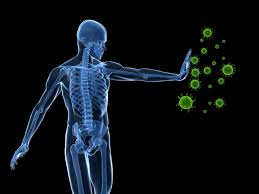
Image result for hospital washing hands tired npr
By Marilee Tolen

Did your mother ever say to you "go wash your hands or someone will die?"

Of course not. But maybe she should have, especially if you were going to grow up to be a doctor or a nurse or someone working in a public health care system.

Hospital acquired infections are killing people more than we know. One case I recently heard about affected someone visiting the hospital who was not even a patient!

The Center for Disease Control (CDC) projected this year that one of every 22 patients would get an infection while hospitalized.
This comes out to 1.7 million cases a year. Out of this 99,000 will die. And this can happen from something that begins as a simple routine procedure.

This is why I get so nuts when someone I care about goes to the hospital for anything - from an Emergency Room visit to a little nip and tuck. . . and my family just doesn't understand! They think I am overly concerned.

But you see I know the world of microbes (I loved microbiology) and I know the parties these little guys like to have, especially in hospitals with open flesh. Starting an intravenous alone opens flesh.

When I worked clinically as a nurse I worked in ICU (Intensive Care Unit) with many fresh post-operative patients (people who just returned from surgery). It is always important to wash hands before and after we take care of patients, but especially with patients who have had surgery.

I used to see doctors mosey in to see patients and flip off the covers, open the bandages and look at the surgical site, and then go to the next patients and do the same thing. . .and not wash their hands. I don't mean to only pick on doctors - some other personnel (x-ray techs, etc) participated in that too.

I often wonder if that is still happening these days in the hospitals. I think the answer is yes as we see the rise in hospital infections.

Hospitals now have antibacterial soaps and gels for health care workers to use on their hands. But that has created a whole host of other problems. It is very irritating to the skin for many people. Probably because the active ingredient in most antibacterial products is triclosan, an antibacterial agent that kills bacteria but it also has been shown to kill human cells.

But most importantly antibacterial soaps and gels contribute to the development of antibiotic-resistant bacteria. Enter "MRSA"-Methylcillin Resistant Staph Aureus - one of the super-bugs that is brilliant enough to know how to resist antibiotics. But guess what it doesn't know how to fight? Essential Oils!

Research done by Sue Chao last year through Young Living showed that the essential oil blend "RC" was extremely effective against MRSA. Other blends such as Thieves can be very effective against most pathogenic organisms as well.

The problem of resistant super bugs like MRSA and other strains extend beyond the hospital. This is an issue that is becoming part of our every day life.

Visit http://www.HomeSpaLady.com for simple tips on natural health and beauty that you can do at home. Subscribe to Home Spa Lady's free "Tips of the Week" newsletter delivered to you each and every Wednesday in your e-mailbox. Visit Home Spa Lady's blog to read tips right now!

Article Source: http://EzineArticles.com/?expert=Marilee_Tolen
http://EzineArticles.com/?Natural-Health---Death-From-Not-Washing-Hands&id=833797

Wednesday, March 4, 2015

After Children and Divorce: Can You Still Be Friends?

By Dr Melissa Mullins

Today, even though statistics show that the divorce rate among couples that have children is decreased by 40 percent, many couples with children say goodbye to their marriage. This happens for many, many reasons; some complicated and some not so complicated. However, about half of all children in the US will observe the ending of their parents' marriage.

Divorce happens because of numerous reasons and every couple has a unique story behind their decision to separate. Trying to stay friends is solely your decision and one that takes time to figure out. If you were a victim of domestic violence or abuse, or an affair, your story is considerably different and it may be impossible to remain friends. That is totally understood. However, if you have children involved, it is important to consider their emotional health when deciding to live separate lives.

Getting Past Rough Patches

As with any separation or divorce, it will take time to get past the feelings of hurt or resentment. It is essential to let time do its work; this cannot be rushed. Many divorces or separations have periods of disagreements between the two adults that once loved each other. Being "friends" may not be an option at this point; however, if you can somehow remain civil toward one another and keep from arguing with the kids, this will help the children get through this with you.

Putting Feelings Aside

After some time and some type of resolutions have been made, it will be time to try to put your negative feelings aside and move on. Granted, this is not easy because many hurtful acts or words may have been reciprocated between the two of you. Yet, if you have children, try to think of their needs and the fact that they are not going to want to listen to constant arguing between the two of you. This type of negative communication will lead to stress and anxiety on you as well as the kids, which is certainly not healthy.

Forgiving

After even more time has passed, try to consider forgiveness. It will do nothing to constantly think about what happened to cause the marriage to dissolve, and finding peace with everything will help your emotional and physical well-being. This certainly does not mean you need to "forget about it", because whatever happened in the marriage will always be in your memories. However, learning to cope and forgive will help you and your children. Staying emotionally and physically well will trickle down to the children, and this is a good thing!

Children First

Please remember that the children come first. If your marriage ends in a very negative way, consistently talking destructively about your ex will only cause more hurt feelings within the kids. Think about it. Your spouse is your children's father or mother, and they love them unconditionally. Hearing harmful words or seeing harmful actions can cause major resentment in the children. Shelter their feelings and protect them, even if you have anger toward your ex.

So, can you be friends with an ex? Yes, you can. Not in the way that means you have to go out to dinner and hang out on a regular basis, but on a conversational yet distant level. Many couples, after time of healing from any ill-will, are friends. There are couples who have vowed to stay friends for the sake of the children. It is never easy for children to see the two people they love the most break-up, but if it must happen, it definitely makes it easier if they try to get along!

Dr. Melissa Mullins
Goal Achievement Coach

What I do is help people to get "unstuck" and to regain balance in their lives through life coaching.

Please visit my website for additional information at http://www.drmelissamblog.com

Article Source: http://EzineArticles.com/?expert=Dr_Melissa_Mullins
http://EzineArticles.com/?After-Children-and-Divorce:-Can-You-Still-Be-Friends?&id=8932907

Friday, January 23, 2015

Should Animal Testing Be Banned?


By: idebate.com


In this debate "testing" should be defined as all testing on animals including, medical research, cosmetics, toxicology testing, and psychological research involving animal subjects. Most existing bans on animal research, when they have been implemented, have involved some form of disciplinary action by a professional body and the possibility of criminal prosecution.

Medical research is the hardest case for proposition in this debate to prove, since it has previously yielded substantial benefits for humanity , while contemporary animal research continues to contribute demonstrably to the speed and efficiency with which new scientific break throughs are achieved. Focusing the proposition case on toxicology, or cosmetics alone would divert the debate into an area of law and ethics that is settled in most respects: many states around the world have instituted bans using animals to test cosmetics and the toxicity of domestic cleaning products. Thus the best proposition strategy is to focus on the hard case of medical research.

Animal research has been used for several centuries as part of efforts to better understand the world around us. Almost all states actively research on animals at present. The total scale of all research on vertebrates is hard to measure, but according to some estimates it could be as high as 115,000,000 animals per year, with the vast majority of these being euthanized at the end of the period of experimentation.

The pharmaceutical industry spends a significant amount of time conducting research on animals. Due to the relative paucity of drugs that make it on to the market place after the initial testing phases, the global cost of each successful new drug in terms of animal lives, is around 5.75 million animals. By contrast the now shrinking industry sector on chemical safety testing using animals, uses around 860 animals per chemical when screening for carcinogens (cancer-causing substances).

Whilst much the research described above is categorized as causing minimal pain and suffering, figures obtained in 2010 show that in the USA alone 97,123 animals were used in research likely to involve pain and suffering, where pain killers and sedatives would not be administered. However, it should be born in mind that this figure is equal to only 8.5% of the total number of animals used in research activities covered by the US Animal Welfare Act - but the act does not cover mice, rats, birds or fish.

Please click here for opposing arguments and more info from original content -

http://idebate.org/debatabase/debates/animal-research-debate/house-would-ban-animal-testing

Bibiographic details:

    Page name: This House would ban animal testing
    Author:
    Publisher: idebate.org
    Site name: idebate.org
    Date published: February 17, 2012
    Date accessed: January 23, 2015

Thursday, December 4, 2014

What are your thoughts on Ebola?

State your thoughts on the outbreak of Ebola here.

Colorized transmission electron micrograph (TEM) of ebola virus virion
(http://www.cdc.gov/vhf/ebola/modules/flexslider/about-ebola.jpg)


For more info on Ebola...

1. http://www.bbc.com/news/world-africa-28755033

2. http://www.cdc.gov/vhf/ebola/